How to make dry ablution (tayammum), step by step
The two strikes and full wiping that make up dry ablution (tayammum), its sunnahs, the method in order, and what breaks it.
Tayammum has two strikes on the ground: one for your face, one for both your arms. The method is the same whether you are doing it in place of wudu or in place of ghusl.
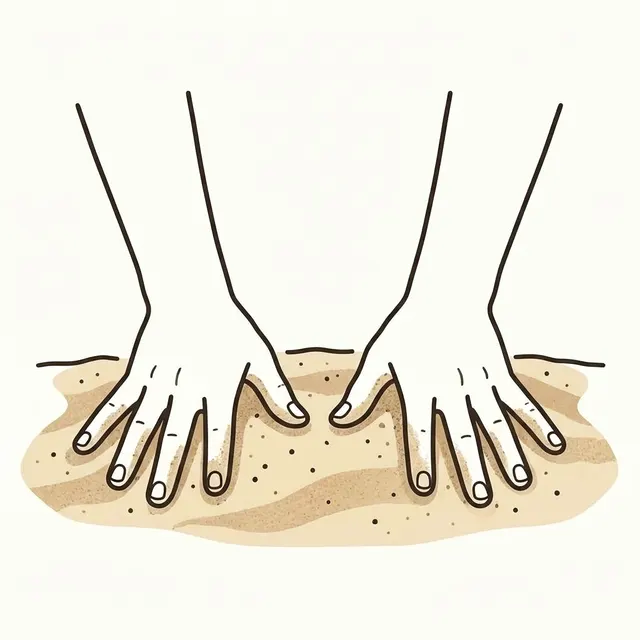
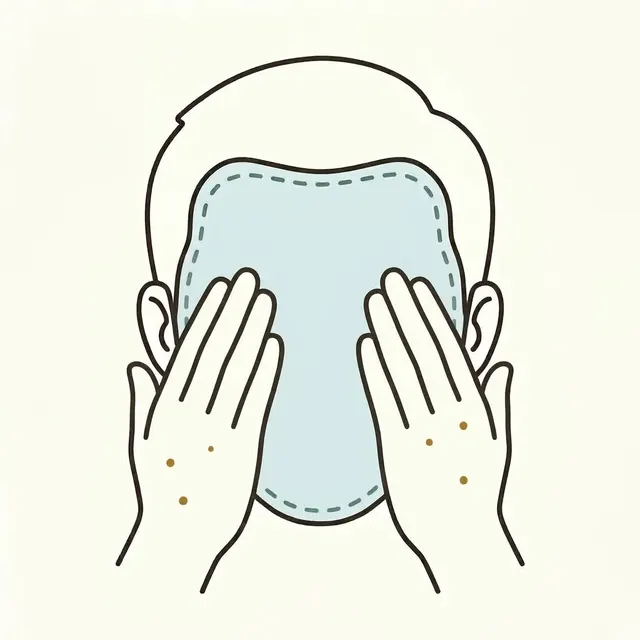
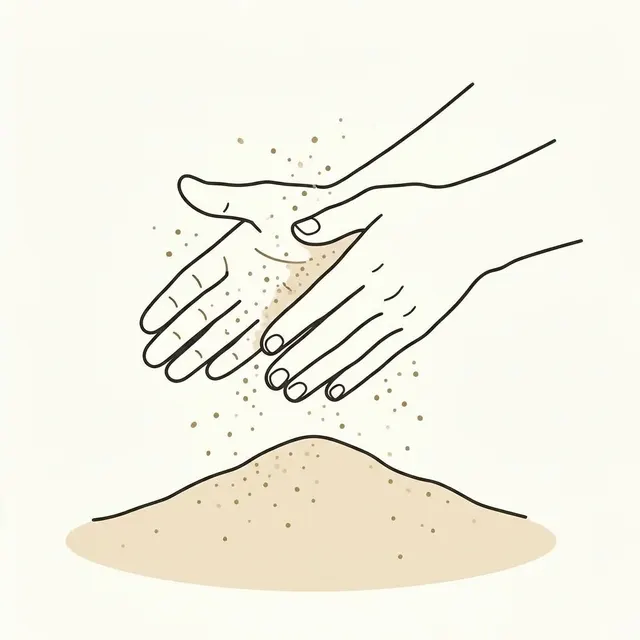
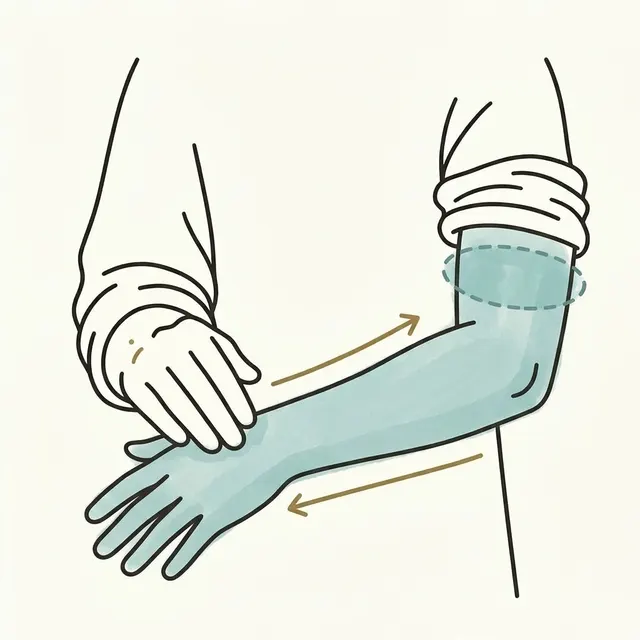
Make tayammum like this
- Make your intention, say "Bismillah," and strike both palms on clean soil or dust with your fingers spread out.
- Wipe your hands all over your face, making sure no part is missed.
- Strike your palms on the soil again.
- Wipe your hands over each arm up to and including your elbows, making sure the whole arm is covered.
Tayammum has two pillars: striking the ground once and wiping the face, then striking again and wiping both hands to the elbows. The method is the same whether the tayammum stands in for wudu or for ghusl.
The pillars of tayammum
- Strike both hands on the ground or dust and wipe them over the face.
- Strike again and wipe both hands up to and including the elbows.
- In both cases, cover the area completely (the whole face, and both hands to the elbows), leaving no spot unwiped.
The sunnahs of tayammum
- Saying "Bismillah."
- Striking the palms on the ground with the inner sides facing down.
- Placing the hands on the ground and dragging them forward.
- Pulling the hands back after dragging them forward.
- Shaking off the excess dust from the hands.
- Keeping the fingers spread while placing the hands on the ground.
- Doing it in order: the face first, then the right hand, then the left.
- Wiping without delay, one action following the next.
The method in full
- Recite "Bismillah," make the intention, and strike the palms on the dust with the fingers spread wide.
- Drag the hands forward, then back, shake off the excess dust, and wipe the whole face thoroughly, leaving no part untouched, combing through a beard, where there is one.
- Strike the palms on the dust again and shake off the excess. Place the four fingers of the left hand on the back of the right hand's fingers and drag them up to the elbow, covering the whole forearm.
- Drag back down the inside of the right arm to the fingers, and use the left thumb to wipe the outer side of the right thumb.
- Do the same for the left hand with the right hand, then wipe between the fingers; there is no need to strike the ground again just for this.
The wiping of tayammum must cover the whole face and both hands to the elbows completely: including around the eyes and eyebrows, the space between the nostrils, and the lips beneath a mustache once it is moved aside. Any jewelry such as bracelets must be removed so the skin beneath is wiped too. Tayammum is not valid if any part of the face or hands is left unwiped.
1| Situation | Effect |
|---|---|
| Something that would break wudu happens | Breaks a tayammum made in place of wudu |
| Something that would make ghusl necessary happens | Breaks a tayammum made in place of ghusl |
| Water becomes available, or the person becomes able to use it | Breaks the tayammum entirely |
| One tayammum was made for both wudu and ghusl, then wudu is broken, or water becomes available only for wudu, or health improves enough to allow wudu without harm | The tayammum remains valid for ghusl, but not for wudu; it keeps standing in for ghusl until something that necessitates ghusl occurs |
Tayammum rests on two arkān (pillars): a first ḍarb (strike) on the ground, wiped over the face, and a second, wiped over both hands to the elbows. The method is identical whether the tayammum substitutes for wuḍūʾ or for ghusl.
The two pillars
- The first strike: the hands are struck upon the ground or dust and wiped over the face.
- The second strike: the hands are struck again and wiped over both hands to and including the elbows.
- Istīʿāb (complete coverage) in both: the whole face and both hands to the elbows must be wiped, with no spot left unwiped.
The sunan of tayammum
- Reciting 'Bismillāh.'
- Striking the palms on the ground with their inner faces down.
- Placing the hands on the ground and dragging them forward.
- Drawing the hands back after the forward drag.
- Shaking off the excess dust from the hands.
- Keeping the fingers spread when the hands are placed on the ground.
- Observing tartīb (order): the face first, then the right hand, then the left.
- Wiping muwālāt (without delay between the actions).
The method in full
- Recite 'Bismillāh,' form the niyyah, and strike the palms on the dust with the fingers spread wide.
- Drag the hands forward and then back, shake off the excess dust, and wipe the entire face thoroughly, leaving nothing untouched, combing through a beard where present.
- Strike the palms on the dust once more and shake off the excess. Lay the four fingers of the left hand on the back of the right hand's fingers and drag them up to the elbow, covering the whole forearm.
- Draw back down the inner side of the right arm to the fingers, using the left thumb to wipe the outer side of the right thumb.
- Repeat the same for the left hand using the right, then perform khilāl between the fingers; no fresh striking of the ground is required for this.
Masḥ in tayammum must be istīʿābī (complete) over the whole face and both hands to the elbows: including the area around the eyes and eyebrows, the space between the nostrils, and the lips beneath a mustache once it is moved aside; jewelry such as bracelets or bangles must be removed so the skin beneath is reached. Tayammum is invalid if any part of the face or hands is left unwiped.
1| Situation | Effect |
|---|---|
| Whatever would break wuḍūʾ occurs | Nullifies a tayammum made in place of wuḍūʾ |
| Whatever would necessitate ghusl occurs | Nullifies a tayammum made in place of ghusl |
| Water becomes available, or its use becomes possible | Nullifies the tayammum outright, since the ʿudhr (excuse) has lifted |
| A single tayammum was made with the intention of covering both wuḍūʾ and ghusl, and subsequently wuḍūʾ is broken, or water becomes available only in a quantity sufficient for wuḍūʾ, or the person's health improves enough to permit wuḍūʾ without harm | The tayammum remains valid for ghusl but not for wuḍūʾ, and continues to stand in for ghusl until something necessitating ghusl occurs |
This is the English translation of Nisab Ahle Khidmaat Sharia, exactly as the book has it, for the passages this page was written from. About 1,016 words. Switch back to Guide for the rewritten version.
Rulings of Tayammum (Dry Ablution)
- Tayammum is a purification method using pure soil or dust instead of water for performing ablution (wudu) or a full bath (ghusl), usually due to the absence of water or inability to use it.
- Three Obligatory Steps in Tayammum:
- Intention (Niyyah): Make an intention in the heart to purify oneself as a substitute for wudu or ghusl.
- Wiping the Face: Strike both hands on pure soil, then dust off any excess, and rub them over the face to ensure the whole face is covered.
- Wiping Both Arms Up to the Elbows: Strike both hands again on pure soil, then rub each arm, including the elbows, to cover them completely.
- Procedure of Tayammum:
- Start by making the intention to perform tayammum as a substitute for wudu or ghusl. Say “Bismillah” and tap both hands on pure soil or dust.
- Wipe the hands over the face fully, making sure no part is left out.
- Tap hands again and wipe them over each arm up to the elbows, ensuring full coverage.
Tayammum is now complete.Note:
- Wiping should be done with at least three fingers.
- Remove tight rings or any oils from the face and hands that could block the soil.
- One tayammum can be used for both wudu and ghusl if intended.
- Materials for Tayammum:
- Pure soil or anything similar (like sand, pebbles, lime, etc.) can be used. Tayammum cannot be done on non-earthly materials (such as gold, silver, iron, wood, or cloth) unless they have a layer of dust on them.
- When is Tayammum Permissible?:
- When traveling or outside a town and no water is available within a mile.
- When using water may cause or worsen an illness.
- If there is danger in reaching the water (e.g., due to wild animals or enemies).
- If essential items (like a bucket or rope) for fetching water are unavailable.
- If water is only enough for drinking.
- In situations where using water may lead to missing Eid or funeral prayers.
- Breaking of Tayammum:
- Tayammum for wudu is broken by anything that breaks wudu, and tayammum for ghusl is broken by anything that necessitates ghusl.
- Tayammum is also invalidated if sufficient water becomes available or if the reason for tayammum ceases (e.g., recovery from illness or danger removed).
Rulings of Tayammum (Dry Ablution) 51. Rulings on Wiping (Masah) in Tayammum: (Explanation of Conditions 2 and 3)
- Wiping is a condition in tayammum.
- The entire face and both hands (up to and including the elbows) must be wiped completely. No area should be left untouched, including:
- The area around the eyes and eyebrows.
- The space between the nostrils.
- If a mustache covers the lips, the lips beneath should also be wiped after moving the mustache.
- Any jewelry on the hands, like bracelets or bangles, should be removed to ensure that the area beneath is also wiped. Tayammum will not be valid if any part of the face or hands is left unwiped.
- If there is anything on the tayammum areas that prevents wiping, such as wax, fat, or a tight ring on the finger, it must be removed. Dust should also reach between the fingers, so doing khilal (intertwining) of the fingers is obligatory.
- Wiping should be done with at least three fingers; fewer than three fingers is not permissible.
Rulings of Tayammum (Dry Ablution) 54. Tayammum’s Pillars
- Two Strikes: First, strike hands on the ground (or dust) and wipe over the face, then strike again and wipe over both hands up to the elbows.
- Complete Coverage: Ensure complete coverage by wiping all areas of the face and both hands up to the elbows, so that no spot remains unwiped.
Rulings of Tayammum (Dry Ablution) Note
There is no need to strike the hands on the ground again for wiping between the fingers.
Rulings of Tayammum (Dry Ablution) 55. Sunnahs of Tayammum
- Saying “Bismillah” (In the name of Allah).
- Striking the palms on the ground with the inner sides facing down.
- Placing the hands on the ground and dragging them forward.
- Pulling the hands back after dragging.
- Shaking off excess dust from the hands.
- Keeping fingers spread when placing hands on the ground.
- Performing in order (first the face, then the right hand, followed by the left hand).
- Wiping without delay.
Rulings of Tayammum (Dry Ablution) 56. Method of Performing Tayammum
- Recite “Bismillah,” make the intention, and strike the palms on the dust with fingers spread wide.
- Drag the hands forward and then back, shake off excess dust, and wipe the entire face thoroughly, ensuring no part is left untouched (and comb through the beard if present).
- Strike the palms again on the dust, shake off the dust, and place the four fingers of the left hand on the back of the right hand’s fingers, then drag up to the elbow, covering the entire arm.
- Drag back from the elbow along the inside of the right arm, up to the fingers, and use the left thumb to wipe the right thumb from the inner side.
- Repeat similarly for the left hand, and then wipe between the fingers (without striking again).
Rulings of Tayammum (Dry Ablution) Note
The method for performing Tayammum is the same for both Wudu and Ghusl.
Rulings of Tayammum (Dry Ablution) 57. Things That Nullify Tayammum
- Anything that breaks Wudu will also break the Tayammum done for Wudu, and anything that makes Ghusl obligatory will also break the Tayammum performed for Ghusl.
- If the excuse for Tayammum is removed, such as finding water or being able to use it, the Tayammum will be broken.
- If one Tayammum was made for both Wudu and Ghusl, and then something breaks the Wudu or water becomes available to make only Wudu, or if the person's health improves and they are now able to make Wudu without harm, then the Tayammum will still be valid for Ghusl but not for Wudu. It will continue to count for Ghusl until something that makes Ghusl obligatory happens.
Rulings of Tayammum (Dry Ablution) Note
Islam allows us to continue performing Tayammum as long as we cannot access water, even if several days pass. Do not think that Tayammum is not as purifying as Wudu or Ghusl. This is a satanic whisper because, just like Wudu or Ghusl purifies a person to perform prayers, Tayammum does the same. This is a special mercy from Allah, granted specifically to the Ummah of Muhammad ﷺ, where the earth itself becomes a means of purification.
وَالْحَمْدُ لِلّٰهِ عَلٰى ذٰلِكَ.
Related
- The four obligatory acts (fard) of ablution (wudu) The four obligatory (fard) acts of ablution (wudu) explained in full: the face, the arms, wiping the head, and the feet.
- What dry ablution (tayammum) is, and its conditions The definition of dry ablution (tayammum), when it stands in for ablution (wudu) or the full bath (ghusl), its six conditions, and the rulings of its intention.
- How to make ablution (wudu), step by step The full sunnah method of ablution (wudu) in order, from the intention to the supplication at the end, with the words to say.
- How to make the full bath (ghusl), step by step The full sunnah method of the full bath (ghusl) in order, from washing the hands to the final pouring, with the notes that make it valid.