How to purify the body, clothes, and other things
How impurity is removed from the body, clothes, skins, the ground, metal and glass, utensils, oil and honey, and other items.
Different things get purified in different ways. The most common rule is simple: wash it three times.
| Item | How to purify it |
|---|---|
| Your skin, where you can't see the impurity | Wash it three times, or wipe with something clean if that's needed instead |
| Your skin, where you can see the impurity | Wash until it is actually gone; the number of times doesn't matter |
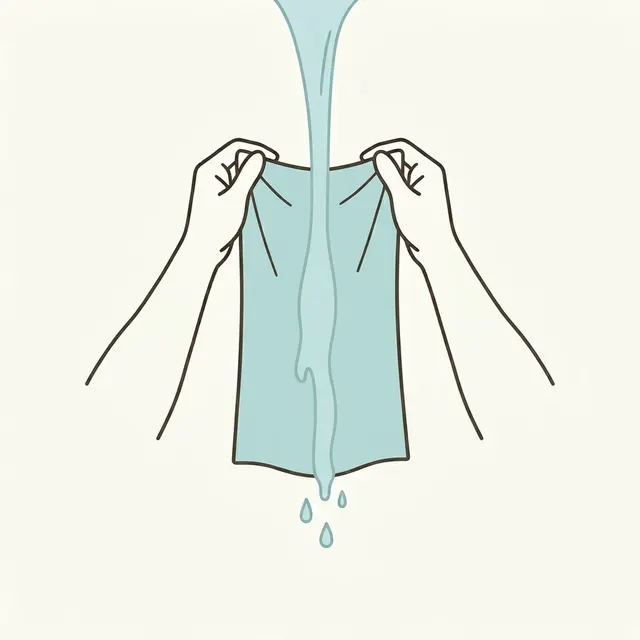
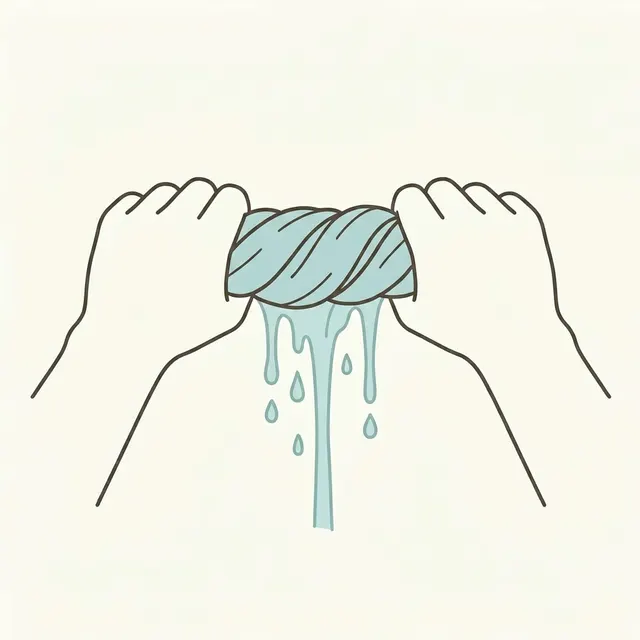
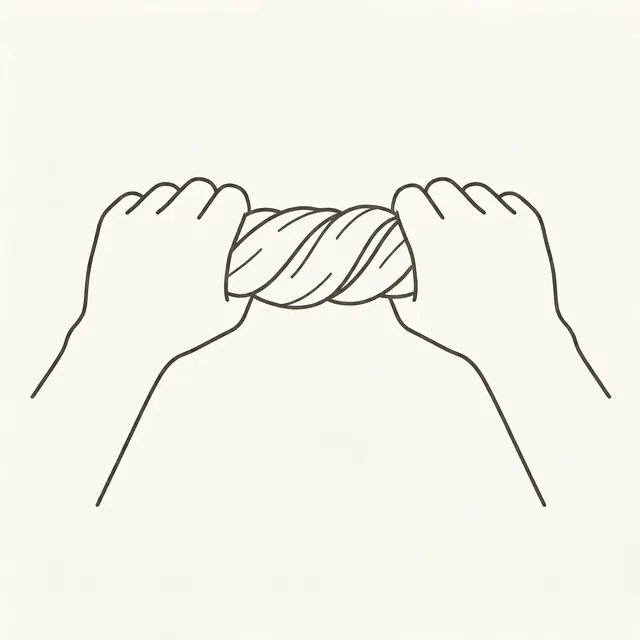
| Clothes, with impurity you can't see | Wash three times, squeezing hard each time so no more water comes out when you squeeze again |
| Clothes, with impurity you can see | Wash with clean water until it is gone, even if a stain or smell that's hard to remove stays behind |
| Shoes, socks, or leather | Rub or scrub off dried dirt; for a wet, unseen impurity, sprinkle dust or ashes on it, rub, then wipe |
| Metal, jewellery or glass that isn't engraved | Rubbing, wiping, or washing three times purifies it |
| Pots and dishes that don't soak up liquid | Rubbing or wiping is enough |
| Pots and dishes made of clay or wood that do soak up liquid | Wash three times and let them dry out fully each time |
| A dish a dog has licked | Wash it three times, drying it each time; washing it seven times, with one of those washes using earth or soil, is even better |
| Dry earth or ground | It becomes pure once it dries out and the impurity is no longer there, or once rain washes it away |
Impurity on your body or clothes must be washed off before prayer. If you can see it, wash until it is gone; if you cannot see it, wash three times, squeezing the cloth well each time. Dried semen can be scraped off clothes, but wet semen must be washed.
1234The skin of an animal that died without being slaughtered becomes pure by tanning. Shoes and socks with visible impurity on them are purified by rubbing or scrubbing it off; for a wet impurity you cannot see, sprinkle dust on it, rub, and wipe.
123456789Impure ground becomes pure once it dries and no colour or smell is left. A dish a dog has licked must be washed three times, drying it each time, and seven is better. If a mouse dies in solid ghee, throw away the ghee around it and the rest is still pure.
123456| Situation | How to purify it |
|---|---|
| An unseen (invisible) impurity on a body part | Wash it three times, or wipe it with something clean where that is needed |
| A visible impurity on a body part | The number of times does not matter; wash until it is actually removed |
| Dried dirt on the body | Scraping it off is enough, as long as no other impurity (such as urine or semen) is present where it is scraped; otherwise it must be washed, not just scraped |
| Impure oil on the body | Washing three times purifies it, even if some greasiness remains, except for the fat of a dead animal, where the greasiness itself must be removed |
| A wound where washing would cause harm | Wiping it three times with a clean, damp cloth is sufficient |
| An impure dye or colour stained into the body or hair | Washing until the water runs clear is enough, even if the colour does not fully disappear |
| An impure substance that has gotten under the skin | Washing purifies it; there is no need to remove the skin |
| Unseen impurity on a woman's breast, where a child has sucked from it | It is purified after the child sucks three times; for visible impurity, the number of times does not matter, only that it is removed |
| Situation | How to purify it |
|---|---|
| Dried dirt on clothes | Shaking or brushing it off is enough, even if a slight mark remains; the clothes stay pure even if they get wet again afterwards |
| Semen on clothes, still wet | Brushing is not enough; it must be washed |
| Any other visible impurity on clothes (besides semen) | Wash with clean water; there is no fixed number of washes, only that the impurity and its effect are removed. If a stubborn stain remains despite washing (for instance, one that soap or hot water cannot fully lift), there is no need to keep trying; it is enough that the water runs clear |
| An invisible impurity on clothes | Wash three times, wringing thoroughly each time: meaning with enough force that squeezing the cloth again afterwards produces no more water |
| A large tarpaulin or coarse cloth that is hard to wring, or very fine or old cloth that might tear if wrung hard | Wash three times and let it dry thoroughly each time (until no more water drips from it) instead of wringing |
| A garment where the impurity has not fully soaked in and it is hard to wring | Washing three times is enough: no need to dry it thoroughly as well |
| An impure tarpaulin or coarse cloth left for a long time in running water | It becomes pure once it is reasonable to assume the impurity has washed away |
| Impure oil or fat on cloth | Washing three times purifies it, even if some greasiness remains, except for the fat of a dead animal, where the greasiness must be fully removed |
After the first and second wringing it is better to clean the hands as well; after the third, both cloth and hands are purified together, provided the wringing was done with full force each time; otherwise both remain impure. The same logic applies if the cloth is then hung up and a drop of water falls from it: the drop is pure too, provided the third wringing was done with full force.
Impurity on the body or clothes must be removed before prayer. A visible impurity is washed until it is actually removed, however many washes that takes; an invisible impurity is washed three times, with the cloth wrung thoroughly each time. Dried semen may be scraped off clothes, but wet semen must be washed.
1234| Situation | How to purify it |
|---|---|
| An animal slaughtered properly, with Bismillah and Allahu Akbar said over it | Its skin is purified by the slaughter itself |
| An animal that dies without being slaughtered (carrion) | Its skin is purified through tanning, whether the tanning is done by a Muslim or a non-Muslim |
| A skin tanned with an impure substance (such as the fat of a dead animal), where wringing is not possible | Wash it three times, wringing thoroughly each time |
| The same, where wringing is possible | Wash it three times, letting it dry after each wash until water stops dripping |
| Visible impurity (feces or urine, wet or dry) on shoes or socks | Rubbing or scrubbing purifies them |
| An invisible, wet impurity (such as alcohol or urine) on shoes or socks | Sprinkle dust or ashes on it, rub, then wipe it off; if it has dried, simply wash it |
| Visible impurity dried onto fur | Rubbing it purifies it |
The skin of a properly slaughtered animal is pure by the slaughter itself, and the skin of carrion is purified by tanning. Visible impurity on shoes or socks is removed by rubbing or scrubbing; an invisible wet impurity is removed by sprinkling dust or ashes on it, rubbing, and wiping it off, and once dried, by washing.
123456789| Method | How it works |
|---|---|
| Drying | The ground is purified once it dries and the effects of the impurity (colour or smell) no longer remain |
| Rain | Rain falling on the ground and removing the effect of the impurity purifies it |
| Pouring water | Pouring water over it three times, until the effects of the impurity are no longer visible, purifies it |
| Pouring, rubbing and wiping | Pouring water three times, rubbing it in by hand, and wiping with a clean cloth after each pour also purifies it |
| Turning the soil over | Turning the upper layer of soil to the bottom and the lower layer to the top purifies it |
| Covering | Covering the impurity with soil or another material, so that it is no longer visible, purifies it |
Once the earth has dried and been purified, pouring water on it again does not make it impure once more. Objects not directly fixed into the ground (trees, grass, walls, thresholds, columns) or objects merely resting on the ground as a surface, such as bricks or stones, are purified by drying just as the ground is; but a felled tree, cut grass, or bricks and stones not resting on the ground cannot be purified without washing. Rough stones and similar earth-like items are purified by drying, the same as the ground itself. Pottery made from impure clay is purified by firing.
| Item | How to purify it |
|---|---|
| Plain iron, brass, silver or gold items (swords, knives, jewelry), glass such as mirrors, or oiled utensils: anything that does not absorb water | Rubbing, wiping, or washing three times purifies it |
| Decorative, engraved or ornately designed jewelry or utensils | These must be washed; rubbing or wiping alone is not enough |
| Item | How to purify it |
|---|---|
| New earthenware or wooden utensils that absorb water | Wash three times and let them dry fully each time |
| Oiled utensils, porcelain, or old earthenware | Rubbing or wiping is sufficient |
| Earthen or stone utensils | Firing them also purifies them |
| A utensil a dog has licked or put its mouth to | Wash it three times, drying it each time; washing it seven times is better, with one of those seven washes done using earth or soil |
| Situation | How to purify it |
|---|---|
| A mouse falls and dies in a jar of solidified ghee | Remove and discard the ghee immediately surrounding the mouse; the rest of the ghee stays pure |
| Impurity falls into liquid ghee or oil | Add one-fifth water and heat until the water evaporates, leaving only the ghee or oil; or add water, mix well, then remove the ghee or oil and discard the water. Repeating this three times purifies it |
| Honey becomes impure | Add one-fifth water, heat until it evaporates, then add water again and boil. Repeating this three times purifies it |
Impure ground is purified once it dries and no trace of colour or smell remains, or by rain or pouring water. A utensil a dog has licked must be washed three times, dried each time, and seven washes is better, one of them with earth. Where a mouse dies in solidified ghee, the ghee immediately around it is discarded and the rest remains pure.
123456| Situation | How to purify it |
|---|---|
| The head or feet of a goat become blood-stained after slaughter | Purified by burning |
| Part of the grain on a threshing floor becomes impure (such as from animal urine or dung), and the exact portion is unknown | Take a small amount, wash it, and mix it back with the rest; if only a small, identifiable part is impure, wash that part three times and dry it |
| A small part of cotton becomes impure | If it is likely to fly away when rubbed, rubbing alone purifies it; otherwise it will not be pure without washing. If it is not known which part is impure, rubbing can purify it too |
| Situation | Method |
|---|---|
| An unseen (invisible) najāsah on a body part | Washed three times, or wiped with something clean where that suffices |
| A visible najāsah on a body part | The number of washes is immaterial; washing continues until it is actually removed |
| Dried dirt on the body | Scraping suffices, provided no other najāsah (urine, semen) is present at the site scraped; otherwise washing, not mere scraping, is required |
| Impure oil on the body | Three washes purify it even where some greasiness persists, except for the fat of a dead animal, where the greasiness itself must be eliminated |
| A wound where washing would cause harm | Wiping three times with a clean, damp cloth suffices |
| An impure dye or colourant on the body or hair | Washing until the water runs clear suffices, even where the colour itself does not fully disappear |
| An impure substance beneath the skin | Washing purifies it without any need to remove the skin |
| Unseen najāsah on a woman's breast, from which a child has suckled | Purified once the child suckles three times; for visible najāsah, the count is immaterial, only removal |
| Situation | Method |
|---|---|
| Dried dirt on clothes | Shaking or brushing suffices, even if a faint mark remains; the garment stays pure even once wetted again |
| Semen on clothes, still moist | Brushing does not suffice; washing is required |
| Any other visible najāsah on clothes | Washed with clean water; no fixed number of washes is specified, only that the najāsah and its effect are removed. Where a residual stain resists removal (as by soap or hot water), there is no obligation to persist further; it suffices that the water runs clear |
| Invisible najāsah on clothes | Washed three times, wrung thoroughly (ʿaṣr) each time: 'thorough' meaning with enough force that a further squeeze yields no more water |
| A large tarpaulin or coarse cloth difficult to wring, or fine or aged cloth liable to tear under wringing | Washed three times and dried thoroughly each time (until no further dripping) in place of wringing |
| A garment where the najāsah has not fully penetrated and wringing is difficult | Three washes suffice, without the further requirement of thorough drying |
| An impure tarpaulin or coarse cloth left for an extended period in running water | Purified once it may reasonably be presumed the najāsah has been carried away |
| Impure oil or fat on cloth | Three washes purify it even where some greasiness remains, except the fat of a dead animal, where the greasiness must be eliminated entirely |
It is preferable to clean the hands after the first and second wringing; after the third, cloth and hands are purified together, provided each wringing was performed with full force; otherwise both remain impure. Where the cloth is then hung and a drop falls from it, that drop is likewise pure, contingent on the third wringing having been performed with full force.
Najasah on the body or clothes must be removed before prayer. A visible najasah is washed until it is actually removed, with no fixed number; an invisible najasah is washed three times, with thorough wringing (asr) each time. Dried semen may be scraped from clothes, but moist semen must be washed.
1234| Situation | Method |
|---|---|
| An animal slaughtered by dhabḥ shar'ī, with Bismillah and Allāhu Akbar pronounced over it | Its hide is purified by the slaughter itself |
| An animal dying without proper slaughter (carrion) | Its hide is purified by tanning, whether performed by a Muslim or a non-Muslim |
| A hide tanned with an impure substance (such as the fat of a dead animal), or otherwise contaminated, where wringing is impossible | Washed three times, wrung thoroughly each time |
| The same, where wringing is possible | Washed three times, left to dry after each wash until dripping ceases |
| Visible najāsah (feces or urine, wet or dry) on shoes or socks | Rubbing or scrubbing purifies them |
| An invisible, moist najāsah (alcohol, urine) on shoes or socks | Dust or ashes are sprinkled on it, rubbed in, and wiped away; where dried, simple washing suffices |
| Visible najāsah dried onto fur | Purified by rubbing |
The hide of an animal slaughtered by dhabh shar'i is purified by the slaughter itself, and the hide of carrion by tanning, whoever performs it. Visible najasah on shoes or socks is removed by rubbing or scrubbing; an invisible moist najasah is removed by sprinkling dust or ashes, rubbing, and wiping, and once dried, by washing.
123456789| Method | Mechanism |
|---|---|
| Yabis (drying) | The ground is purified once dry and the traces (colour, smell) of the najāsah no longer remain |
| Rainfall | Rain removing the trace of the najāsah purifies the ground |
| Pouring water | Pouring water three times, until the traces are no longer visible, purifies it |
| Pouring, rubbing and wiping | Pouring water three times, rubbing by hand, and wiping with a clean cloth after each pour |
| Qalb (inversion) | Turning the upper soil to the bottom and the lower to the top purifies it |
| Covering | Covering the najāsah with soil or other material so it is no longer visible |
Ground once dried and purified is not rendered impure again merely by later being wetted with water. Items not fixed directly into the earth (trees, grass, walls, thresholds, columns) or items merely resting on it as a surface, such as bricks or stones, are purified by drying exactly as the ground is; but a felled tree, cut grass, or bricks and stones not resting on the ground cannot be purified without washing. Rough stones and similarly earth-like matter are purified by drying, as the ground itself is. Pottery fired from impure clay is purified by that firing.
| Item | Method |
|---|---|
| Plain iron, brass, silver or gold items (swords, knives, jewelry), glass such as mirrors, or oiled utensils: anything non-absorbent | Purified by rubbing, wiping, or washing three times |
| Decorative, engraved, or ornately worked jewelry or utensils | Must be washed; rubbing or wiping alone does not suffice |
| Item | Method |
|---|---|
| New, absorbent earthenware or wooden utensils | Washed three times, dried fully each time |
| Oiled utensils, porcelain, or aged earthenware | Rubbing or wiping suffices |
| Earthen or stone utensils | Purified also by firing |
| A utensil to which a dog has put its mouth or which it has licked | Washed three times, dried each time; seven washes are preferable, one of the seven performed with earth or soil |
| Situation | Method |
|---|---|
| A mouse falls and dies within a jar of solidified ghee | The ghee immediately surrounding the mouse is removed and discarded; the remainder stays pure |
| Najāsah falls into liquid ghee or oil | A fifth part of water is added and heated until it evaporates, leaving the ghee or oil; alternatively, water is added, mixed thoroughly, and then the ghee or oil is drawn off and the water discarded. Repeating this three times purifies it |
| Honey becomes impure | A fifth part of water is added, heated until it evaporates, and water is again added and brought to a boil; repeated three times, this purifies it |
Impure ground is purified by drying, once no trace of colour or smell remains, or by rain or pouring water. A vessel a dog has licked is washed three times, dried each time; seven washes are preferable, one of them with earth. Where a mouse dies in solidified ghee, the ghee immediately surrounding it is discarded and the remainder stays pure.
123456| Situation | Method |
|---|---|
| A goat's head or feet stained with blood after slaughter | Purified by burning |
| Part of the grain on a threshing floor becomes impure (from animal urine or dung), the affected portion unidentified | A small sample is taken, washed, and mixed back with the remainder; where a specific small part is known to be impure, that part alone is washed three times and dried |
| A small portion of cotton becomes impure | Where it is likely to be dispersed by rubbing, rubbing alone purifies it; otherwise washing is required. Where the impure portion is unidentified, rubbing can purify it as well |
This is the English translation of Nisab Ahle Khidmaat Sharia, exactly as the book has it, for the passages this page was written from. About 1,764 words. Switch back to Guide for the rewritten version.
Rulings of Impurities (Najasa) (Note)
- Cleaning Unseen Impurities:
If an invisible impurity is on clothes, washing three times and wringing each time thoroughly will purify it. If the impurity is visible, it must be washed until the impurity is removed, even if stains or odor remain.
- Cleaning a Container Contaminated by a Dog:
If a dog licks or touches a container with its mouth, wash it three times and dry it each time. Washing it seven times is preferable, and once out of the seven washes, use soil to scrub the container for thorough purification.
Rulings of Impurity (A) Purification of the Body
- If a body part becomes impure due to an unseen impurity, it can be purified by washing it three times, or by wiping it with something clean (if necessary or out of necessity). However, if the impurity is visible, the number of times is not important, but it should be washed sufficiently to remove the impurity.
- If dirt has dried on the body, it can be removed by scraping it off, provided that no other impurity, like urine or semen, is in the area where it is removed. Otherwise, it will need to be washed, not just scraped.
- If impure oil is on the body, washing three times will purify it, even if the greasiness remains. However, for the fat of a dead animal, the greasiness must be removed to purify the body.
- For a wound or a place where blood or pus has come out, if washing causes harm, then wiping it three times with a clean, damp cloth is sufficient to purify it.
- If an impure color or dye has stained the body or hair, washing it to the point where the water runs clear is sufficient, even if the color doesn’t completely wash away.
- If an impure substance is inside the skin, simply washing it will purify it. There’s no need to remove the skin.
- If an unseen impurity is on a woman’s breast, and the child sucks it three times, it will be purified. For visible impurities, the number of times is not important, as long as the impurity is removed.
Rulings of Impurity (B) Purification of Clothes
- If dirt has dried on clothes, simply shaking or brushing it off will purify the clothes, even if a slight mark remains. Whether the clothes are new or old, once cleaned, they will remain pure even if they get wet again.
- If semen is on clothes and still wet, brushing it off is not enough; it must be washed. The clothes will not be purified without washing.
- If any other impurity (except semen) is visible on clothes, it should be washed with clean water. There’s no set number of times for washing; it is necessary that the impurity and its effect are removed. Whether one wash or three washes is enough, if the impurity does not completely come off, continue washing until it is removed. However, if a stain remains and it is difficult to remove (e.g., from soap or hot water), there’s no need to insist on trying to remove it. The essential part is that the impurity itself is removed; for example, if a stain of color or blood remains on the cloth, it is enough to wash it until the water runs clear, even if the stain stays.
- If an invisible impurity falls on clothes, washing them three times and squeezing them thoroughly each time will purify the cloth. "Thorough squeezing" means that the person should apply enough force that, if the same person squeezes the cloth again, no drop of water should come out.
- After squeezing the cloth the first and second times, it is better to clean the hands as well. However, after the third squeeze, both the cloth and hands will be purified, provided the squeezing is done with full force to the extent that no water comes out if the person squeezes it again. Otherwise, both the cloth and hands will remain impure.
- If someone washes the cloth three times, squeezing it thoroughly each time, especially on the third squeeze, to the point where no drop of water comes out after re-squeezing, and then hangs the cloth and a drop of water falls from it, both the cloth and the drop will be purified. If the squeezing was not done with full force, then both the cloth and the drop of water will remain impure.
- If an invisible impurity falls on something that is not difficult to squeeze, like a large tarpaulin or coarse cloth, it will be purified by washing it three times and drying it thoroughly each time (drying means leaving it until no more water drips from it). This same rule applies to very fine or old cloth that could tear if squeezed too hard.
- If the item is such that the impurity has not completely absorbed into it and it is difficult to squeeze, simply washing it three times is sufficient. There is no need to dry it thoroughly (i.e., leaving it until no water drips from it).
- If a piece of impure cloth, like tarpaulin or coarse cloth, is left in running water for a long time, and it is assumed that the impurity will be washed away, it will become pure.
- If impure oil or fat is on a cloth, it will be purified by washing it three times, even if some greasiness remains. However, for the fat of a dead animal, the greasiness must be removed before the cloth can be purified.
- If a piece of cloth needs to be washed three times to purify it, it does not have to be done consecutively (though washing the body consecutively is necessary).
- If a part of the cloth becomes impure, and you do not remember which part it is, you may wash any part of the cloth, and it will become pure. However, it is better to wash the entire cloth.
Rulings of Impurity (C) Purification of Skins, etc.
- Every animal (whether halal or haram) when slaughtered according to Islamic law by Saying "Bismillah" and "اَللّٰہُ اَکْبَرْ," its skin will be purified. If the animal dies without being slaughtered (i.e., is carrion), its skin can be purified through tanning (whether done by a Muslim or a non-Muslim).
- If the skin is tanned with an impure substance (such as fat from a dead animal) or becomes impure due to contact with something impure, and its squeezing is impossible, it will be purified by washing it three times and squeezing it thoroughly each time. If squeezing is possible, wash it three times and leave it to dry after each wash until the water stops dripping.
- If visible impurity (such as feces or urine, whether dry or wet) falls on shoes or socks, rubbing or scrubbing them will purify them. If an invisible impurity (like alcohol or urine, and wet) falls on them, sprinkle dust or ashes on it, rub it, and then wipe it off. If it is dry, simply wash it.
- If visible impurity falls on fur and dries, rubbing it will purify it.
Rulings of Impurity (D) Purification of Earth (and Similar Surfaces)
- If the earth becomes impure, it can be purified through the following methods:
- When it dries and the effects of impurity (such as color or smell) no longer remain.
- When rain falls and removes the effect of impurity.
- By pouring water three times in a manner that the impurity's effects are no longer visible.
- By pouring water three times, rubbing it by hand, and wiping it with a clean cloth after each wash.
- By turning the upper soil to the bottom and the lower soil to the top.
- By covering the impurity with soil or another material in such a way that the impurity is not visible.
- If the earth has dried and been purified, pouring water on it again will not make it impure.
- Objects that are not directly attached to the ground, such as trees, grass, walls, thresholds, or columns, or those placed on the ground as a surface like bricks or stones, become purified when dried. However, objects like cut trees, grass, or bricks and stones that are not placed on the ground cannot be purified without washing. However, rough stones or similar items that are like the earth will purify by drying, just as the earth does.
- Pottery made from impure clay is purified by firing.
Rulings of Impurity (E) The Purification of Iron, Glass, etc.
- Items made of iron, brass, silver, gold (such as swords, knives, jewelry), or glass (mirrors) or oiled utensils — in short, all such things that do not absorb water — will become purified by rubbing, wiping, or washing them three times.
- Decorative items, jewelry, or utensils that are engraved or designed need to be washed and cannot be purified by rubbing or wiping alone.
Rulings of Impurity (F) The Purification of Utensils
- New earthenware or wooden utensils (which absorb water) that become impure should be washed three times and dried each time to become purified.
- Oiled utensils, porcelain, or old earthenware utensils can be purified by rubbing or wiping.
- If earthen or stone utensils are fired, they will also become purified.
- If a dog puts its mouth or licks a utensil, the utensil should be washed three times, drying it each time, to become purified. However, it is better to wash it seven times, with one of those seven times being washed with earth.
Rulings of Impurity (G) The Purification of Oil, Ghee, and Honey
- If a mouse falls and dies in a jar of solidified ghee, remove the ghee surrounding the mouse and discard it. The rest of the ghee remains purified.
- If impurity falls into liquid ghee or oil, add one-fifth of water, heat it until the water evaporates, leaving only the ghee or oil. Alternatively, add water, mix it well, and then remove the ghee or oil, discarding the water. If this method is repeated three times, it will be purified.
- If honey becomes impure, add one-fifth of water, heat it until the water evaporates, and then add water again to boil. Repeat this process three times to purify it.
Rulings of Impurity (H) The Purification of Miscellaneous Items
- If the head or feet of a goat become blood-stained after slaughtering, they will be purified by burning.
- If a portion of grain in a threshing floor becomes impure (such as from animal urine or dung), and it is unknown which portion is impure, take a small amount and wash it, then mix it back with the rest of the grain. If only a small part of the grain is impure, wash it three times and dry it to purify it.
- If a small part of cotton becomes impure and there is a chance that it will fly away when rubbed, it will become pure just by rubbing. Otherwise, it will not become pure without washing. If it's not known which part is impure, it can also be purified by rubbing.
Related
- Legal and physical impurity, and the ways things are purified The difference between legal impurity (hadath) and physical impurity (najasah), and the twelve recognised ways of purifying something.
- Severe and light impurity, what is excused, and what is not impure at all What counts as severe or light impurity, how much of each is excused on the body or clothes, and things that are not impure at all.
- What makes a well impure, and how to purify it What does and does not make well water impure, how many buckets purify it, bucket size, and how long the impurity is assumed to last.
- How to make the full bath (ghusl), step by step The full sunnah method of the full bath (ghusl) in order, from washing the hands to the final pouring, with the notes that make it valid.